
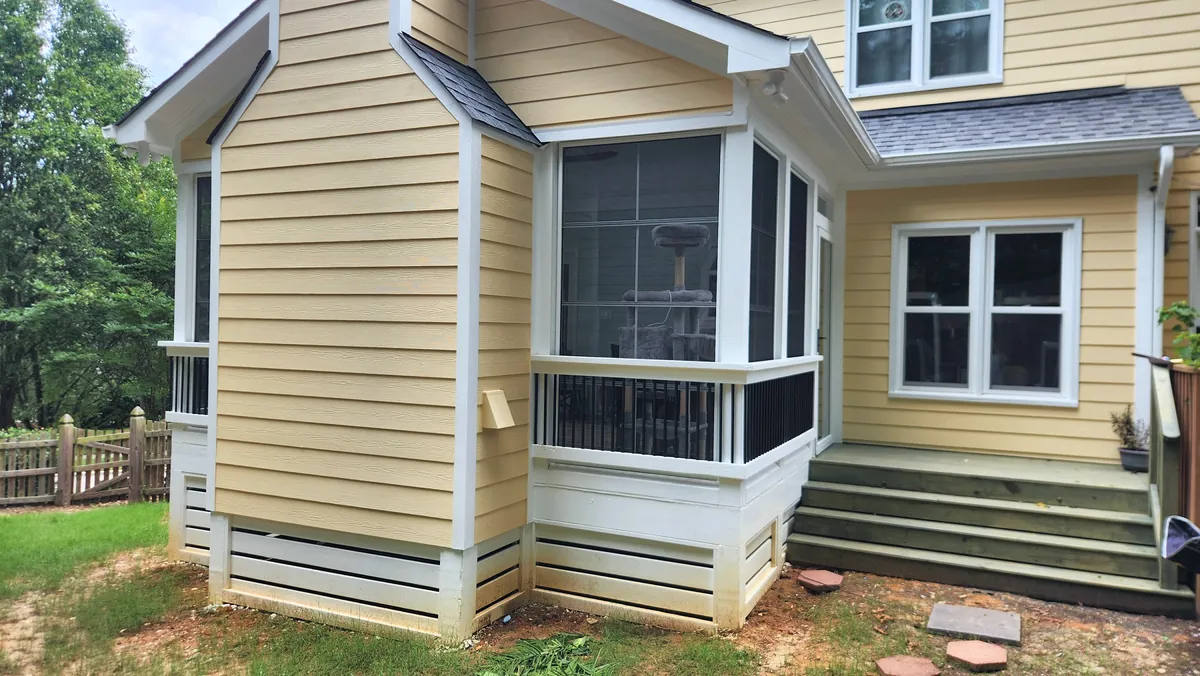
Fiber cement is a durable, paintable siding that stands up well to Carolina heat and humidity. We install it with the right wrap, flashing and clearances, which is where most siding problems start.
It comes in lap boards, shakes and panels, and it's heavier and slower to install than vinyl. We'll compare cost, color and upkeep against vinyl with you so you can pick what fits the house.
Signs this is the right service
- Current siding has rot, swelling, or recurring paint failure
- Walls look uneven or visibly aged from the street
- Moisture-prone areas keep needing repair
- You want a more solid painted exterior finish
- Existing siding is near the end of its service life
How the work goes
Inspect wall condition and moisture-sensitive details before work begins
Replace damaged substrate materials where necessary
Install fiber cement with proper clearances and fastening methods
Coordinate joints, trim, and flashing transitions carefully
Finish edges and penetrations to support water management
What affects the price
- • Square footage and height of the home
- • Complexity of trim, gables, and architectural details
- • Extent of removal and substrate repair needed
- • Panel or lap style selection and finish requirements
- • Accessibility around landscaping, porches, and rooflines
Every project is priced from a visit and drawings, not from a list. These are the things that move the number.
Questions about fiber cement siding
- How is fiber cement siding different from vinyl siding?
- Does fiber cement siding need repainting over time?
- What prep work is required before installation?
- Can damaged sheathing be replaced during the project?
- How long should homeowners expect the installation process to take?
- Ready to Get Started?
We answer these in person. Ask us about your project or call and we'll walk through it.
Related siding services
Available in Apex, Cary, Holly Springs, Raleigh and nearby neighborhoods.