
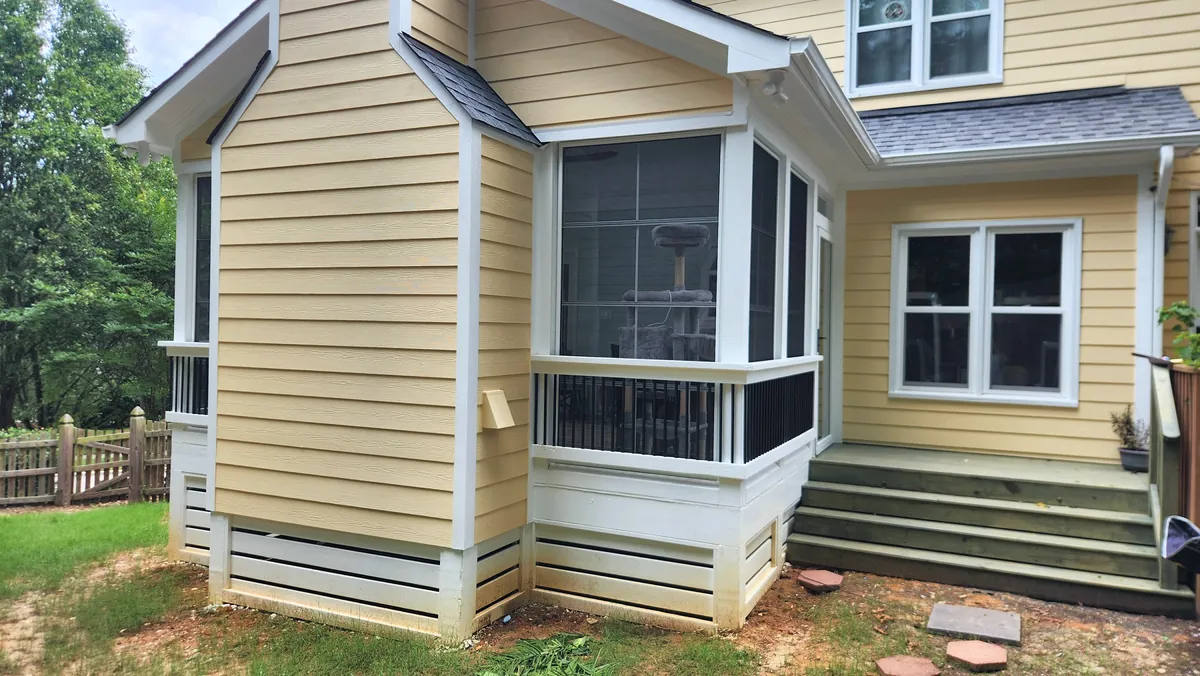
We install vinyl siding with the flashing, trim and venting done right, so it stays straight and keeps water out. Vinyl is low-maintenance and easier on the budget, and it's what we used on our Clayton addition.
Vinyl moves with the temperature, so it has to hang loose enough to expand and contract. Nailed too tight, it buckles, and that's a detail you only notice after the first hot summer.
Signs this is the right service
- Panels are warped, brittle, or pulling away from the wall
- Exterior color looks heavily faded or uneven
- There are repeated repairs in multiple sections
- Old siding shows storm impact or hail marks
- You want a lower-maintenance exterior surface
How the work goes
Inspect existing walls, trim, and moisture-prone areas first
Remove failed materials and address damaged sheathing if found
Install panels with correct fastening and expansion clearance
Tie in corners, trim, and penetrations for a finished look
Check transitions around windows, doors, and rooflines
What affects the price
- • Total wall area and home layout complexity
- • Amount of tear-off or prep work required
- • Condition of sheathing or substrate underneath
- • Style of panels, trim details, and accessory pieces
- • Number of windows, doors, gables, and corners
Every project is priced from a visit and drawings, not from a list. These are the things that move the number.
Questions about vinyl siding installation
- How long does vinyl siding installation usually take?
- Can vinyl siding go over existing exterior materials?
- What happens if damaged sheathing is found during installation?
- How does vinyl siding handle heat and seasonal expansion?
- What maintenance is recommended after installation?
- Ready to Get Started?
We answer these in person. Ask us about your project or call and we'll walk through it.
Related siding services
Available in Apex, Cary, Holly Springs, Raleigh and nearby neighborhoods.